


A year ago, men’s health in Canada wasn’t a priority. Now, it’s on the path to becoming a first-ever national strategy, and it has galvanized attention from coast-to-coast.
This shift was no accident. The release of the Movember Institute’s Canadian report The Real Face of Men’s Health in June 2025, along with sustained advocacy, shone a bright light on the importance of men’s health.
By November 2025, for the first time, a federal Health Minister publicly committed to putting men and boys on the agenda. By December 2025, the federal government committed to delivering a national strategy by the end of 2026. And by February 2026, a multi-stage consultation process was underway to figure out what that strategy should actually look like.
Which brings us to now. The part where what gets said, and what gets surfaced, has a real shot at shaping what comes next.
Movember in Listening Mo’de
Our role in this process is straightforward: listen, convene, and relay. We are here to make sure the voices of Canada’s men’s health sector are heard by government, faithfully and in full.
So far, we’ve hosted convenings in Sherbrooke, Vancouver, and Toronto, bringing together practitioners, researchers, community leaders, and people with lived experience. The mood in each of these sessions was positive, collaborative, and hopeful. There was a palpable feeling that change is upon us.
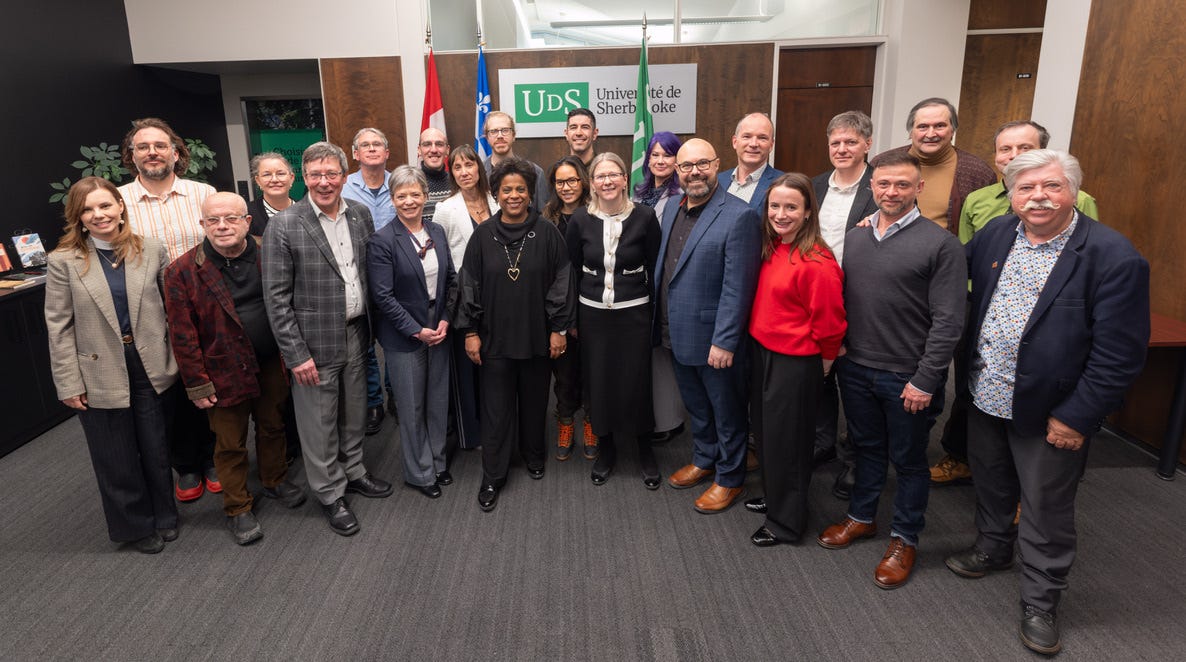
Across all three convenings, some clear and consistent themes have emerged. The same signals, showing up again and again.
This is what we’ve heard so far:
Rethinking the system
Perhaps the most consistent thread across every convening was this: men’s poor engagement with health care is not simply a matter of attitude or stigma. While many important conversations in recent decades have rightly focused on longstanding inequities experienced by women within health systems, participants across these convenings noted that many men and boys continue to struggle to engage with systems that often do not reflect how they seek support, communicate distress, or access care.
As one Vancouver participant put it:
“The system currently demands boys and men fit to it, when the system should really fit to boys and men.”
Participants also consistently pointed to fragmentation across systems, where supports do exist, but are difficult to navigate, poorly coordinated, or disconnected from how men actually seek help. As a result, many men are left to navigate complexity on their own.
In Toronto, the same frustration surfaced in different language. The health system, participants said, is built for crisis, not prevention. Funding flows downstream to acute care, while upstream interventions that could stop problems before they escalate remain chronically underfunded. Ultimately, this leaves community organisations and volunteers carrying a significant amount of the load, often without the long-term support needed to sustain that work.
Where the gaps are most urgent
Across the convenings, participants pointed to a cluster of priority areas where the need is greatest and the current response most inadequate: mental health supports for young men; social isolation and loneliness; gambling addiction; and opioid dependency, particularly in male-dominated industries.
These issues were rarely discussed in isolation: participants emphasized how mental health, addiction, isolation, and trauma reinforce one another over time.
The opioid crisis drew particular attention in Toronto, where we heard that since 2016, three in four opioid deaths have been men, and that in Ontario alone, one in thirteen opioid deaths involve a construction worker.
Participants also repeatedly pointed to key life transitions: from adolescence to fatherhood to job loss and retirement, as predictable moments where the right intervention can change long-term outcomes. In other words, we know when to intervene. We just don’t always do it. Fatherhood, in particular, was identified as a significant and underutilised window of opportunity, often the first moment in a man’s life when he is motivated to engage with health and wellbeing, for reasons beyond himself.
In Vancouver, participants emphasised the disproportionate impact on Indigenous and rural communities, where all of these pressures are amplified, and where the ongoing legacy of colonialism remains a central barrier to engagement with care. The online environment and its impact on young men’s mental health and sense of identity was also raised as an urgent and under-addressed issue, alongside broader concerns around digital harms, gambling, and emerging technologies.
What the sector is asking of government
The ask from participants was not abstract. If anything, the message was strikingly consistent. We know what needs to be done. The question is whether it will be acted on.
Fund what actually works. Across the convenings, there were clear and practical calls to invest in peer support and community-based prevention programs. There was also a consistent call for sustained, predictable funding, particularly for community-based organisations, to move beyond short-term pilots and toward long-term impact. Many effective models already exist. They simply are not reaching enough people. Movember’s recently launched Community Men’s Health Research Program is one example of the kind of community-grounded investment participants repeatedly pointed to: practical, prevention-focused work designed to better understand what helps men and boys engage earlier and more effectively with support systems.
Set the direction, then follow through. Participants were clear that the federal role is not to deliver services directly, but to set direction, coordinate across systems, and help scale what is already working. Even where services exist, they are often difficult to find or access, requiring a level of navigation that many people simply don’t have, especially when they need it most.
Count it, or it doesn’t count. Participants called for improved collection and disaggregation of data on men’s health, alongside stronger accountability measures built into any strategy from the outset. As Toronto participants were direct in saying: “We don’t have a knowledge gap, we have an implementation gap.”
Change the story, change the outcome. There was a strong call for language and messaging that reflects men’s strengths, not just their deficits. As one Vancouver participant put it: “Men aren’t the problem. We’re an asset.” Participants emphasised the importance of meeting men where they are, including through trusted, everyday connectors like peers, coaches, and community leaders.
Don’t let this sit on a shelf. A National Men’s Health Advisory Council, properly funded and meeting regularly, was proposed as a practical governance step to ensure the strategy has teeth beyond its launch.
What’s next
Public submissions remain open until June 1. If you have a view on what a National Strategy for Men and Boys’ Health should look like, now is the time to share it.
Time to show up and do some good.
We would like to thank the incredible partners who have helped make these three convenings possible, in particular: François Poirier (Regroupement provincial en santé et bien-être des hommes), Audrey Brassard, l’Université de Sherbrooke, Dr. John Oliffe (UBC’s Men’s Health Research Program), Nina Gao, the University of British Columbia, the Movember Canada Team, and Enterprise Canada.